
Your Teen Got a Traffic Ticket in Clark County. Here Is What Happens Next.
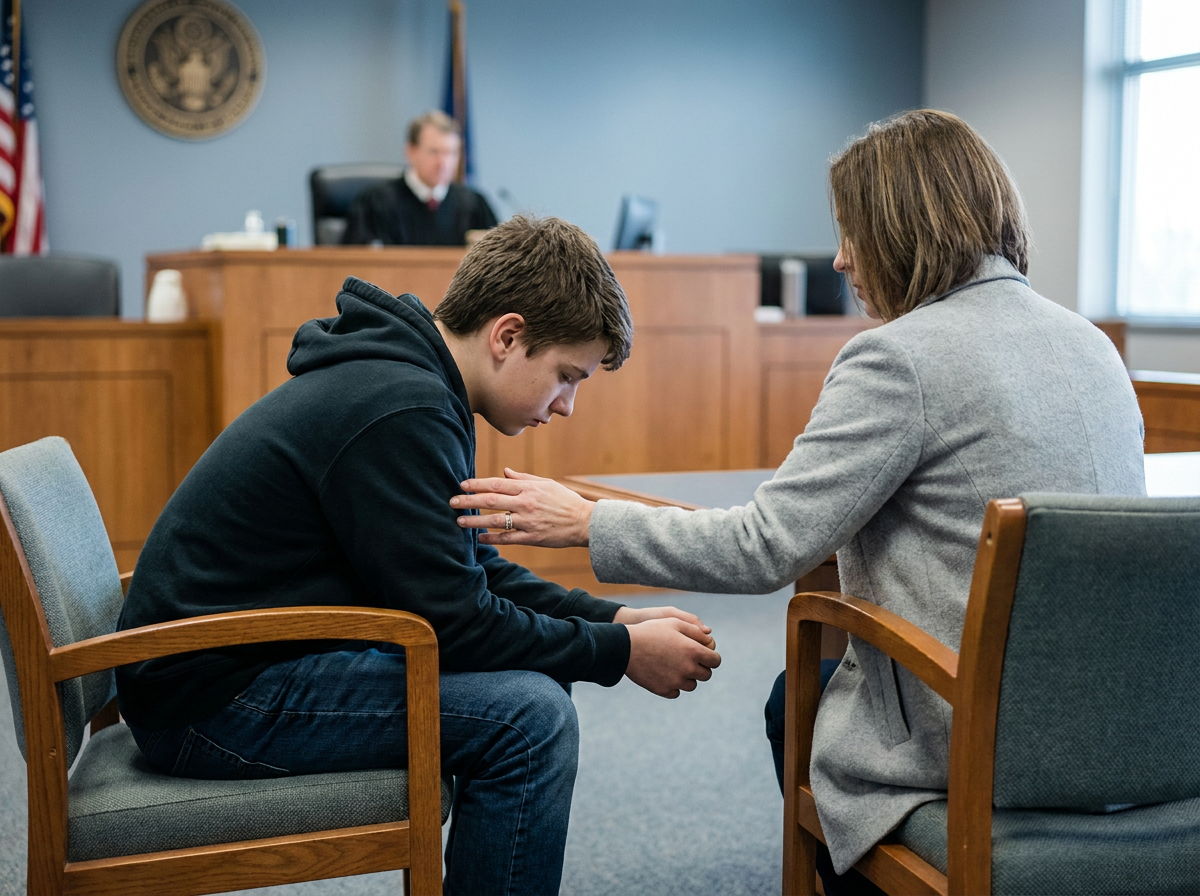
Finding out your teenager received a traffic citation can be stressful, especially when you are not sure what kind of court they will face or what is really at stake. In Nevada, the answer is not always the same as it would be for an adult. This guide walks Clark County parents through exactly how the system works when a minor is cited for a traffic violation — and why it matters to take it seriously from day one.
Which Court Handles a Minor's Traffic Case?
In Nevada, any person under the age of 18 is considered a juvenile under the law. When a minor receives a traffic citation, the case does not automatically go to the same justice or municipal court that handles adult tickets. Instead, jurisdiction belongs to the Clark County District Court Family Division — the Juvenile Court — located at 601 North Pecos Road, Las Vegas, Nevada 89101, (702) 455-2590.
The Juvenile Court has the authority to handle the case itself or transfer it to a Justice Court or municipal court, but only if the judge finds that transfer is in the best interests of the child. This is governed by NRS 62B.380. Regardless of where the case is ultimately heard, the rules are different from an adult proceeding in important ways.
One immediate difference: juveniles cannot pay a traffic citation online and cannot appear remotely. According to Clark County court information, all juveniles must appear in person at the court.
A Parent Must Be Present — Every Time
This surprises many families. Under NRS 62B.380(2)(b), a parent or guardian is required to accompany the minor at every court proceeding. This is not optional, and the court will not grant routine date changes. If you are a working parent, plan accordingly — missing a court date creates additional complications for your child's case.
What Can the Juvenile Court Do?
Under NRS 62E.700, if the court finds that a minor committed a traffic offense, the judge has several tools available:
- Fines — The court can order the minor to pay a fine. If the family demonstrates financial hardship, community service may be ordered instead.
- License suspension recommendation — The court can recommend to the Nevada DMV that the minor's driver's license be suspended.
- Traffic Survival Course — The court can order the minor (and sometimes the parent or guardian) to attend and complete a traffic safety course, and can order the family to pay for it.
- Probation — The court can place the minor on probation with conditions the judge considers appropriate.
The DMV Record Still Follows Your Teen
Here is something parents often overlook: the Juvenile Court is required to forward the record of the traffic offense to the Nevada Department of Motor Vehicles, unless the violation involved only a parking or standing infraction. (NRS 62E.700(2))
That means demerit points can still accumulate on your teenager's driving record. Nevada's demerit point system assigns points based on the severity of the violation — for example, speeding carries 1 to 4 points, and running a red light carries 4 points. A driver whose record reaches 12 or more points within any 12-month period faces automatic license suspension. For a teenager who just started driving, even one citation at the wrong point value can put them dangerously close to that threshold.
How This Differs From Adult Traffic Court
The Juvenile Court is designed with rehabilitation in mind, which creates some meaningful differences from how adult cases are processed:
- The proceedings are not public in the same way adult court proceedings are.
- The judge has more flexibility in ordering educational programs rather than purely punitive outcomes.
- Parental involvement is a legal requirement, not merely encouraged.
- The case may be handled by a judge with a family law background rather than a standard traffic court commissioner.
That said, the real-world consequences — points on the driving record, possible license suspension, fines, and mandatory courses — are very much the same as in adult court.
What Happens to the Record?
Many parents assume that a juvenile traffic case simply disappears when their child turns 18. The picture is more nuanced. Under NRS 62H.140, most juvenile court records are automatically sealed within 60 days after a person turns 18. This is a significant protection.
However, the DMV record of the traffic offense is separate. Because the Juvenile Court forwards the violation to the DMV, the driving record — including any points assessed — may persist beyond the juvenile court record. Parents should not assume that automatic record sealing at 18 wipes the slate clean on the driving side.
Why Legal Representation Still Matters for Juveniles
Some parents assume that because this is "just a ticket," there is no need for a lawyer. But the combination of mandatory court appearances, parental requirements, possible license consequences, and a driving record that follows your teen into adulthood makes this more significant than a simple fine.
An attorney who regularly handles traffic cases in Clark County courts understands how these cases proceed, what outcomes are realistic, and how to advocate for the best possible result — whether that means negotiating a reduction in the charge, working toward dismissal, or minimizing the points that end up on your teenager's driving record.
We Are Here to Help
If your teenager has received a traffic citation in Clark County, Cap & Kudler / Las Vegas Traffic Ticket Defense is available to help. Attorney Donald Kudler handles traffic cases throughout Clark County courts and is familiar with the Juvenile Court process. An early consultation can help your family understand what you are facing and what options are available.
Contact us today to discuss your teen's case. There is no obligation, and the conversation can give you clarity before the court date arrives.
Sources
- NRS 62E.700 — Minor traffic offenses: https://law.justia.com/codes/nevada/chapter-62e/statute-62e-700/
- NRS 62B.380 — Transfer of cases involving minor traffic offenses: https://codes.findlaw.com/nv/title-5-juvenile-justice/nv-rev-st-62b-380/
- NRS 62H.140 — Automatic sealing of juvenile records: https://law.justia.com/codes/nevada/chapter-62h/statute-62h-140/
- Nevada DMV Demerit Point System: https://dmv.nv.gov/dlpoints.htm
- Clark County District Court Family Division: https://nvcourts.gov/find_a_court/district_courts/clark_county_district_court_family_division
- Clark County Juvenile Justice Services: https://www.clarkcountynv.gov/government/departments/juvenile_justice_services/
Got a Traffic Ticket?
Tell us what you're dealing with and we'll explain your options — free of charge.
Free Case Review